
Incorporate a Company in India from Canada: Virtual Office Services by Ctrl Shift
- Canadian entrepreneurs and companies can incorporate a company in India without moving there, using a virtual office address in India.
- Ctrl Shift provides a virtual office for business registration, with a physical office address for mail handling in a prime business location.
- This guide covers company registration in India from Canada, the types of entities, documents, steps, costs, and how a virtual office helps.
- It also suits USA, UK, Russia, Gulf, European, African and Australian companies planning market entry into India.
Why Canadian Companies Are Setting Up in India
- India is one of the fastest-growing economies with a huge consumer market and skilled talent pool.
- Lower operating costs for IT, software development, customer support, back-office and manufacturing.
- Indian subsidiary helps Canadian firms hire local teams, sell locally and work with Indian vendors.
- Strong India-Canada business ties, with a large Indian diaspora in Canada.
- Government schemes like Startup India and Make in India support new businesses.
- A local entity builds trust with Indian clients, banks and partners.
What Is a Virtual Office for Company Incorporation in India?
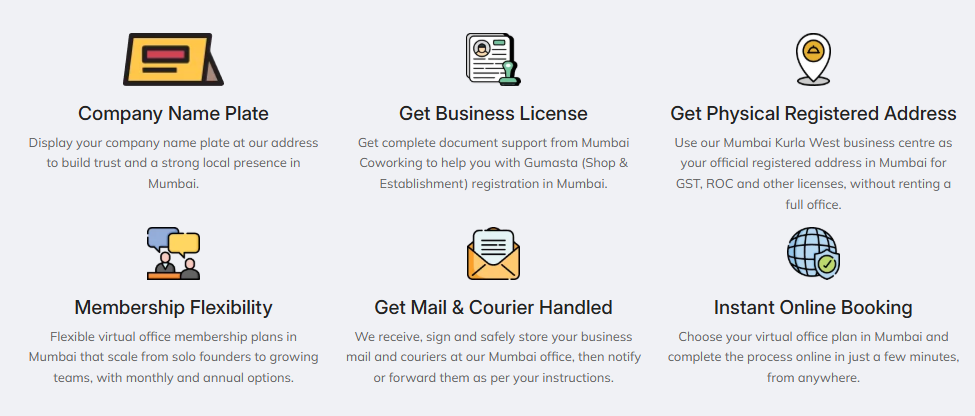
- A virtual office gives your company a registered office address in India without renting physical space.
- Indian law requires every company to have a registered office to receive official communication.
- A virtual office address can serve as your registered office if it comes with proper address proof documents.
- It includes mail and courier handling, and often meeting rooms, call answering and coworking access.
- It is a low-cost, low-risk option for foreign companies testing the Indian market.
- It is also called a registered office address, business address in India or virtual workspace.
Types of Business Entities in India for Canadian Owners
Private Limited Company
- The most popular structure for foreign investors, with limited liability.
- Needs minimum 2 directors and 2 shareholders, and at least one director must be an Indian resident.
- Allows foreign direct investment (FDI) and is easy to raise funds.
Wholly Owned Subsidiary (WOS)
- An Indian company that is 100% owned by the Canadian parent company.
- Allowed under the automatic route in most sectors, subject to FDI rules.
- Good for IT, services, trading and manufacturing.
Limited Liability Partnership (LLP)
- A flexible structure with lower compliance than a company.
- FDI is allowed in LLPs in certain sectors under the automatic route.
One Person Company (OPC)
- For a single owner, but it is mainly meant for Indian residents, so it is not usually suitable for Canadian owners.
Branch Office, Liaison Office and Project Office
- Set up by a foreign company for specific activities, with RBI approval in most cases.
- A liaison office can only do liaison work, not commercial business.
- A branch office can do limited trading, export-import and professional services.
Who Needs a Virtual Office in India?
- Canadian startups and SMEs entering India with limited budgets.
- Remote-first and tech companies with no need for physical space.
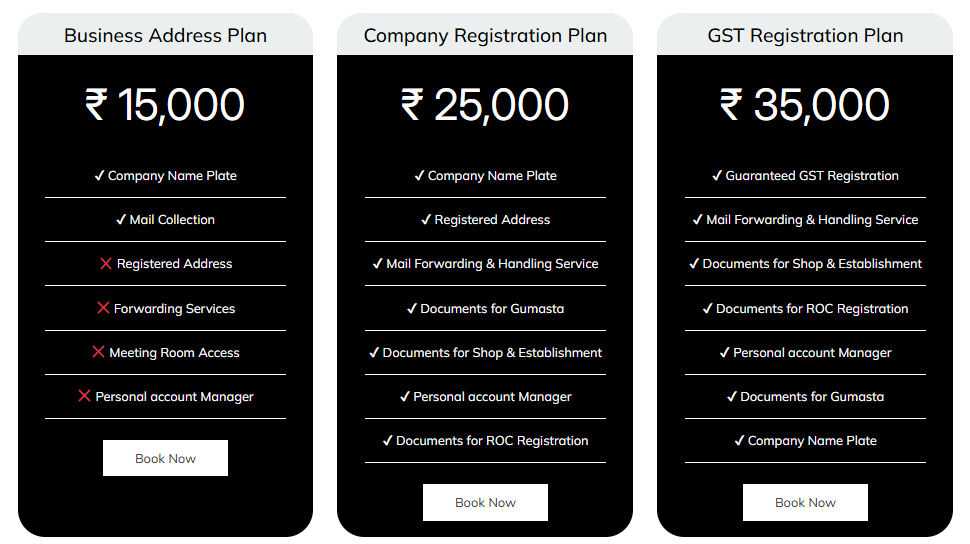
- Consultants, agencies and e-commerce sellers needing a GST-ready business address.
- Non-resident Indians (NRIs), PIOs and OCI holders who live in Canada.
- Foreign directors who want a professional registered office address.
- Companies from the USA, UK, Gulf, Russia, Europe, Africa and Australia with the same needs.
Documents Needed to Incorporate a Company in India from Canada
For Directors and Shareholders
- Passport copy (notarised and apostilled for foreign nationals).
- Photo ID and address proof such as a driving licence, bank statement or utility bill.
- Passport-size photographs and email and phone details.
- PAN card for Indian residents, and for foreigners where applicable.
For the Canadian Parent Company (if a Subsidiary)
- Certificate of incorporation and memorandum and articles of the Canadian company.
- Board resolution approving the Indian subsidiary.
- Notarised and apostilled documents as required.
For the Registered Office
- Rent or service agreement and NOC from the owner.
- Utility bill copy (electricity or property tax receipt), not older than 2 months.
- Ctrl Shift’s virtual office provides these address documents for registration.
Step-by-Step Process: Company Registration in India from Canada
- Choose the business structure (Private Limited, WOS or LLP).
- Pick a virtual office address from Ctrl Shift for your registered office.
- Apply for Digital Signature Certificates (DSC) for the directors.
- Get Director Identification Numbers (DIN) through the MCA portal.
- Reserve your company name using the RUN (Reserve Unique Name) service.
- File the SPICe+ form with the Registrar of Companies (ROC), along with the MOA and AOA.
- Receive the certificate of incorporation, PAN and TAN.
- Open a bank account and remit the foreign capital from Canada.
- File FC-GPR with RBI within the deadline after receiving foreign investment.
- Complete GST registration and other licences as needed.
- Typical timeline is 2 to 4 weeks, depending on documents and approvals.
Business Registration Using a Virtual Office Address
- A virtual office address in India can be used for ROC, GST, PAN, TAN and Shops & Establishment registration.
- It can support IEC (Import Export Code) and MSME (Udyam) registration.
- Always confirm that the address is valid for MCA and GST use and that it matches your business activity.
- Ask your chartered accountant or company secretary to verify the documents.
- Keep your address details consistent across all registrations.
Physical Office Address for Mail Handling
- Get a real street address, not a PO Box, for business mail and courier.
- Government notices, tax letters, bank papers and legal notices are received on your behalf.
- Mail can be scanned and emailed, forwarded to Canada or collected in person.
- Mail alerts help you respond within legal deadlines.
- This is a major benefit when directors are abroad and cannot visit often.
Benefits of Ctrl Shift Virtual Office for Canadian Companies
- Prime business address that boosts credibility.
- Much lower cost than a leased office, with no deposit or fit-out.
- Fast onboarding and flexible plans with no long lock-in.
- Mail handling with scanning and forwarding.
- Meeting rooms and coworking on demand.
- Support for business registration with the right address documents.
- Scalable plans as your Indian operations grow.
- Privacy, since your home address stays off public records.
Compliance After Incorporation
- File annual returns and financial statements with the ROC.
- Conduct board meetings and an annual general meeting (AGM).
- Appoint an auditor and maintain statutory registers.
- File GST returns and income tax returns on time.
- Follow FEMA and RBI rules for foreign investment reporting.
- Meet transfer pricing rules for dealings with the Canadian parent.
- Consider Canada-India tax treaty (DTAA) benefits with a tax expert.
Virtual Office for Companies Worldwide
USA, UK and Europe
- US, UK and EU companies can set up an Indian subsidiary for outsourcing, sales and support.
- A local address helps with hiring, vendor deals and trust.
Canada and Australia
- Canadian and Australian firms can build an Indian base for IT, consulting and sourcing.
Gulf, Russia and Africa
- Gulf traders can use an Indian address for import-export and sourcing.
- Russian and African businesses can use it for trade, payments and local contacts.
- Always check FDI sector rules for your business type.
Frequently Asked Questions (FAQs)
1. Can a Canadian citizen incorporate a company in India?
- Yes. A Canadian citizen or company can set up a Private Limited Company, LLP or WOS in India under FDI rules.
- At least one director must be an Indian resident for a Private Limited Company.
2. Can I use a virtual office address as my registered office in India?
- Yes, in most cases, if it has valid address proof, NOC and rent or service agreement.
- Confirm with Ctrl Shift that the address works for MCA and GST registration.
3. How long does company registration in India take from Canada?
- Usually 2 to 4 weeks, once documents, DSC and DIN are ready.
- Apostille and notarisation of Canadian papers can add some time.
4. How is my mail handled at the physical office address?
- Your mail is received, logged and notified to you.
- Choose scan and email, courier forwarding or pickup.
5. Do I need to visit India to register my company?
- Not always. Much of the process is online, including DSC, DIN and SPICe+ filing.
- Some banking steps may need video verification or a visit, so check with your bank and adviser.
Final Thoughts
- You can incorporate a company in India from Canada with the right structure, documents and a valid registered office.
- Ctrl Shift offers a virtual office with a physical address for mail handling and business registration support.
- It also serves USA, UK, Russian, Gulf, European, African and Australian companies.
- Contact Ctrl Shift today to get your virtual office in India and begin registration.